Category: Windows

Windows – Here you can find Computer-related updates Windows 10, Windows 8, Windows 7, Linux, technology information, and more.

  • 5 Ways to Fix Reboot And Select Proper Boot Device 2025

    5 Ways to Fix Reboot And Select Proper Boot Device 2025

    5 Ways to Fix Reboot And Select Proper Boot Device – When you turn on your computer, an error message appears:  Reboot And Select Proper Boot Device. What does it mean? The computer was working fine when you shut it down, and now it’s not working at all. If your system reboots and has this error message, see the fix below.
    5 Ways to Fix Reboot And Select Proper Boot Device In Windows
    5 Ways to Fix Reboot And Select Proper Boot Device In Windows

    What is Reboot And Select Proper Boot Device Error?

    The “Reboot And Select Proper Boot” error message is your computer’s way of telling you that it can’t find the operating system.

    Read more:

    During the boot process, your system’s BIOS/UEFI knows the hard drive where your operating system is located. Then boot the operating system, and you arrive at the Windows 10 login screen. It’s a very simplified version, but you get the gist of it.

    If the BIOS fails to recognize where the operating system is, it will not load. reboot and select proper device error has several possible causes:

    • Broken BIOS/UEFI installation Instalasi
    • Hard drive damaged
    • Bootloader is broken
    • Broken hardware

    This is not the only cause, but the root of the reboot and select proper device error is usually related to one of these areas.

    So, how to fix the reboot and select the proper device error?

    How to Fix Reboot And Select Proper Boot Device in Windows

    #1. Check the Connection

    The first thing to check is the connection between your hard drive (or SSD) and your motherboard inside the computer. If your hard drive is not communicating with the motherboard properly or has been disconnected altogether, your operating system will not load.

    Checking the inside of your computer case may seem a little confusing. You have to open the cover, and then check the disconnected cable.

    When you open the side of the computer, you should also take advantage of this opportunity to clean the computer. Cleaning your computer may not resolve the reboot and select proper boot device error, but it can help protect against overheating and the problems that stem from it.

    #2. the Wrong Drive was Selected In BIOS/UEFI

    If your hard drive is properly connected to the motherboard, you should try another fix. The next step is to check if your BIOS/UEFI recognizes your hard drive and system boot order. From here, you can understand if the hard drive is the first thing your computer looks for when it tries to load the operating system, or if something has replaced it.

    To check it, you have to enter the BIOS.

    1. During the boot process, you have to press the BIOS/UEFI access key. Specific keys differ between computers, but commonly used keys include F2, F10, DEL, and ESC.
    2. Once the BIOS is loaded, look for a menu or tab named  Boot or similar. Check for a menu named  Boot Device Priority,  Boot Option Order, or similar. The name varies between different motherboard manufacturers and the BIOS used, but the menu content is the same.
    3. In the device priority menu, you need to check two things. First, check your hard drive is on the list. If there is, that’s a good sign. The second thing to check is the boot position. The hard drive containing the operating system should be the first thing to load, and therefore make sure it is placed in  Boot Option 1  or BIOS equivalent. That will put your operating system hard drive in the first boot position.
    4. Now, save your BIOS settings, then restart your system.

    #3. Use Windows Startup Repair

    If you fix the problem with the BIOS, or there is no problem with the BIOS and the boot order to start with, you can try two more solutions.

    Windows Startup Repair From Advanced Options

    Use the Windows Startup Repair feature. This will fix your boot problems automatically, but only if it runs.
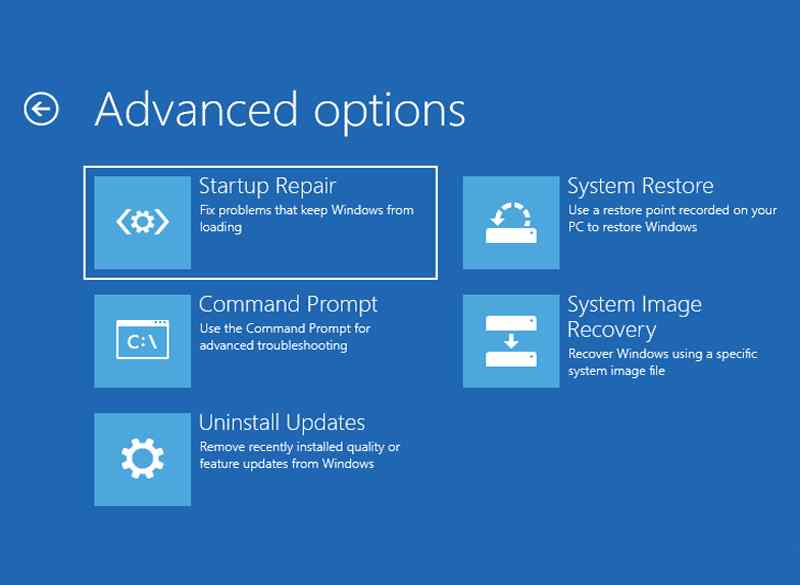
    Windows Startup Repair From Advanced Options
    Windows Startup Repair From Advanced Options

    When Windows has boot problems, it should launch Startup Repair automatically. If this happens:

    1. The Advanced boot options menu will open.
    2. Go to  Troubleshoot > Advanced Options > Startup Repair.
    3. You will then have to enter your password, after which the startup repair process will begin.

    The Startup Repair process may take a while to complete, but it will fix your boot device error.

    Startup Repair Using Command Prompt And Windows Installation Media

    If the advanced boot options don’t open automatically, you can still access them using your Windows 10 installation media. It’s a USB drive or disk with Windows 10 on it. So make sure you have a bootable USB according to the operating system used on your computer.
    Startup Repair Using Command Prompt And Windows Installation Media
    Startup Repair Using Command Prompt And Windows Installation Media

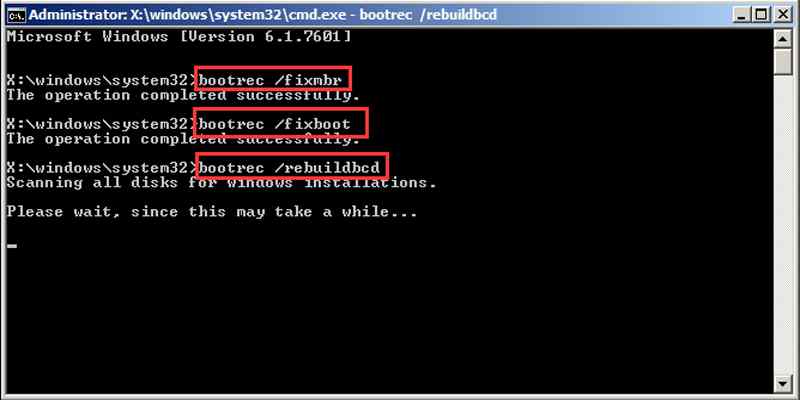
    Once you have your Windows 10 installation media ready, you can force the system to load the installation process. From there, you can repair the boot process manually, using the bootrec.exe tool.

      1. Insert the Windows 10 installation media, then turn on your computer.
      2. Press the F2, F10, F12, or ESC keys to enter the system boot menu. These are some of the buttons that are common but differ between systems.
      3. The Install Now button will appear. At this point, press  Shift + F10  to open the Command Prompt.
      4. Now, you have to enter the following commands in order, pressing Enter each time:

    bootrec.exe /fixmbr
    bootrec.exe /fixboot
    bootrec.exe /rebuildbcd

    1. Once the process is complete, you can restart your computer, remove the Windows 10 installation media, and boot as usual.

    Exporting And Rebuilding Master Boot Record

    If neither of these fixes works, there’s a third fix you can try. Microsoft recommends exporting and rebuilding the BCD storage (where your boot data is stored). You have to enter Command Prompt using your Windows 10 installation media, according to the steps in the previous section.

    When you arrive at the Command Prompt, you will have to enter the following commands in order:

    bcdedit /export c:\bcdbackup
    c:
    cd boot
    attrib bcd -s -h -r
    ren c:\boot\bcd bcd.old
    bootrec.exe /rebuildbcd

    The export and rebuild process should fix your reboot and select boot device error.

    #4. Set Active Partition

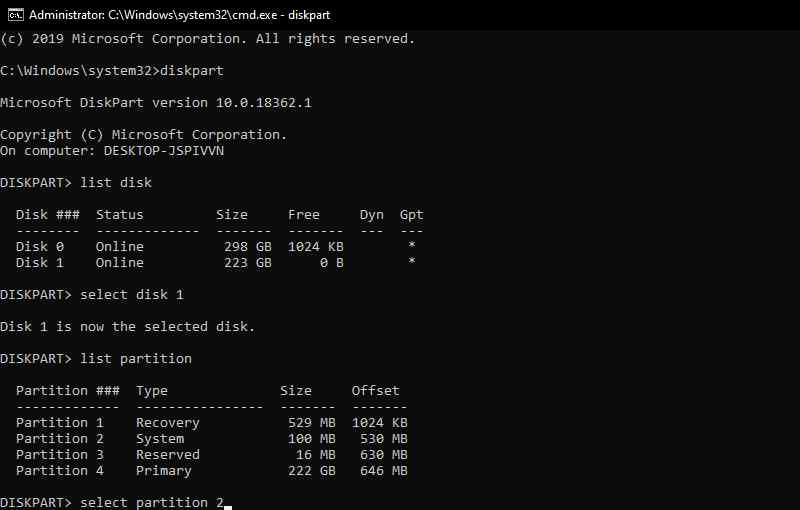
    When you use Command Prompt via Windows 10 installation media, there are other fixes you can try. Windows DiskPart is an integrated system tool that you can use to manage your hard drives and disk partitions. In this case, you can make sure your operating system hard drive is active.

    Again, enter Command Prompt using your Windows 10 installation media, according to the steps in the previous section. When the Command Prompt opens, complete the following process:

    1. Enter diskpart to enter the diskpart tool.
    2. Now, enter the list of disks to see the list of disks on the machine. You need to find out which drive contains your operating system. The drive letter for your operating system is usually  C.
    3. Once you find the correct disk, enter select disk X  (X is the appropriate disk number).
    4. Enter list partition to list the partitions on the disk. You need to select the system partition, which contains the bootloader (the bit of code that launches the operating system). In this case, the admin will select partition 2 by using the command select partition 2.
    5. Now, enter active to mark the system partition as active.
    Set Active Partition
    Set Active Partition

    Reboot your system, and you should no longer have the boot device error.

    #5. Reinstall Windows

    If you have done all of the methods above and none of them have succeeded in overcoming the reboot and selecting the proper boot device error, then another way you can do this is to reinstall Windows. If you have trouble doing this, you can take your laptop or PC to a computer technician so that everything can be handled completely.

    Read more:

    Conclusion:

    So those were some ways to fix reboot and select the proper boot device error. This error is indeed frustrating. It appears without warning and can cripple your computer, leaving you locked out of your important files. But you can use any of the above fixes to restore your boot device to the correct order and regain access to your computer.

  • 5 Ways to Fix Kernel Mode Heap Corruption 2025

    5 Ways to Fix Kernel Mode Heap Corruption 2025

    5 Ways to Fix Kernel Mode Heap Corruption – Are you currently experiencing a sudden crash which is indicated by a blue screen with the stop code KERNEL_MODE HEAP CORRUPTION on your PC? If yes, then you don’t need to panic because, in this post, we will show you how to solve kernel-mode heap corruption causing BSOD.

    5 Ways to Fix Kernel Mode Heap Corruption
    5 Ways to Fix Kernel Mode Heap Corruption

    What is Kernel Mode Heap Corruption?

    In your computer’s operating mode kernel, programs have unrestricted access to basic hardware components. When kernel-mode heap corruption occurs, it means that an error in the running program code has changed the contents of the data stack. This also means that the allocator handle of the heap has been affected.

    Read more:

    What Causes Kernel Mode Heap Corruption?

    This error mostly occurs when the PC is overloaded or used for a long time. Most often, it has to do with computer system drivers. However, users have identified many other conditions causing the problem.

    #1. Hardware Damage

    A faulty hardware component on your computer, such as faulty RAM, can trigger the error.

    #2. Driver Problem

    According to reports by some Windows 10 users, the problem started after they updated their system drivers. In this case, all you need to do is cancel the update. But maybe the driver is outdated.

    #3. Software Compatibility Issues

    Compatibility issues between certain software on your PC can cause unstable system behavior, causing BSOD errors.

    #4. Graphics Card

    Maybe you are trying to open some graphic-intensive software that is too heavy for your Graphics Card to support.

    #5. Corrupted Files

    If there are corrupted files on your system, they can also trigger kernel-mode heap corruption issues. Note that you have to diagnose the cause of the problem using the built-in Event viewer. Follow the guide below to do so:

    1. Press the Windows key + R and press Enter to open the Run dialog box.
    2. Type “ eventvwr ” (without the quotes) in the Run dialog box and press Enter.
    3. In the Event Viewer window, navigate to Windows logs>System.
    4. In the System window, find the Kernel Mode Heap Corruption BSOD log from the table list.
    5. Read the log descriptions displayed under General and Details. The logs should describe the cause of the problem, especially the Event ID and Source information

    How to Fix Kernel Mode Heap Corruption

    Usually, a BSOD error will deny you your usual access to Windows. So, you may need to run your OS in Safe Mode to apply the fix below. Use the steps below to boot Windows in Safe Mode.

    1. Press the Power button and hold down the shift key while the computer boots.
    2. Navigate to Troubleshoot>Advanced option>Startup settings.
    3. Then, press F5 to boot into Safe Mode with Networking.

    #1. Unupdate Your Latest Graphics Card Driver

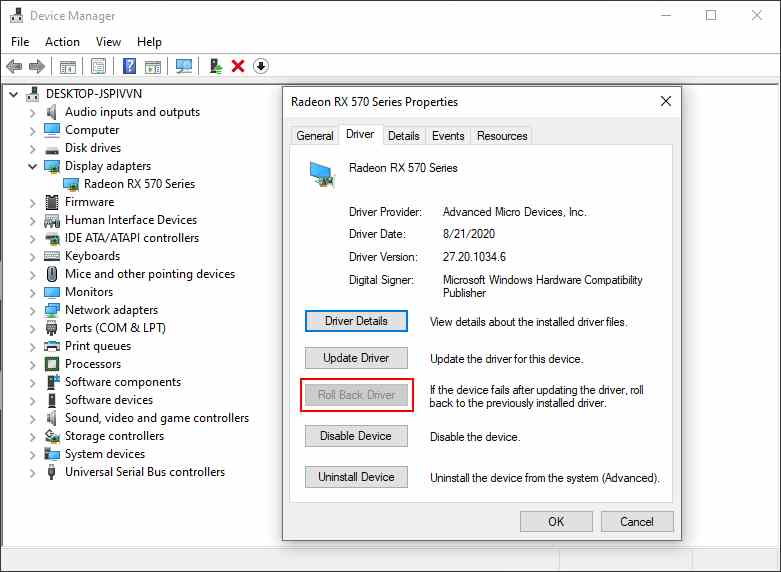
    If you experience problems after updating your Graphics Card, roll back the update. Here’s how to do it:

    Un update Your Latest Graphics Card Driver
    Un update Your Latest Graphics Card Driver
    1. Press the Windows key + R to open the Run dialog box.
    2. Type “ devmgmt.msc ” (without the quotes) and press Enter to open Device Manager.
    3. Navigate the list of items in the Device Manager window and expand Display adapters.
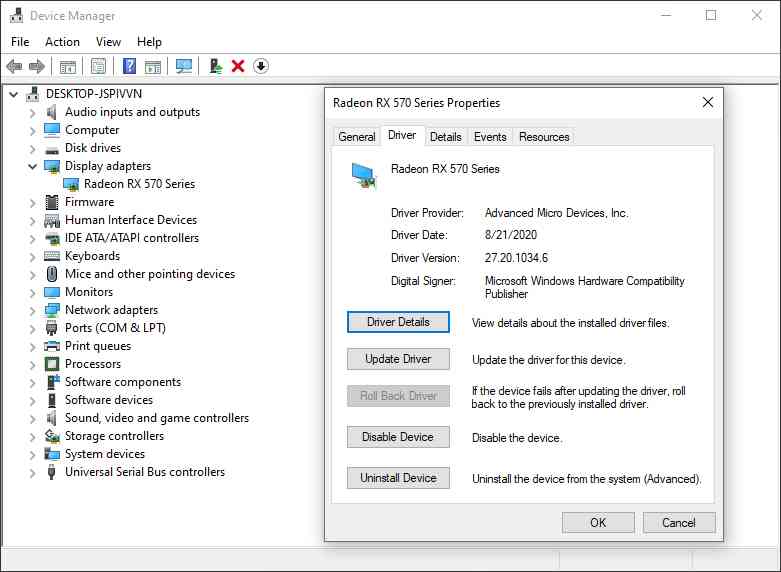
    4. Find the driver (Intel or VMware) from the drop-down list and right-click it.
    5. Select Properties from the context menu.
    6. From the Driver tab in the Properties screen, select Roll Back Driver. (Note: if the Roll Back Driver option is grayed out, it means that there is no latest driver update yet).
    7. On the next screen, select the appropriate response to the question, “ Why are you rolling back? “Click Yes.
    8. Now, restart your computer to complete the process.

    Check to see if the issue is resolved now. If not, try using the next method.

    #2. Reinstall the Graphics Card Driver

    Reinstall the Graphics Card Driver
    Reinstall the Graphics Card Driver
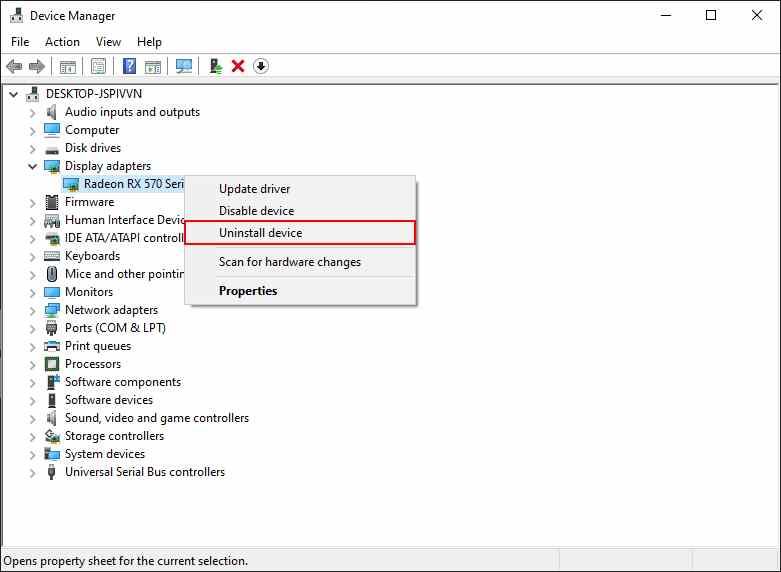
    1. Starting with the same steps as in Method 1, right-click on the driver and select Uninstall device.
    2. On the next screen, check the box next to “ delete the driver software for this device ” (if available).
    3. On the next screen, click on Uninstall.
    4. Restart the computer. Windows will reinstall the driver automatically.

    The problem might be resolved now, but you’ll have to update the drivers again if those fixes don’t solve the problem.

    #3. Update Graphics Card Driver

    Update Graphics Card Driver
    Update Graphics Card Driverv
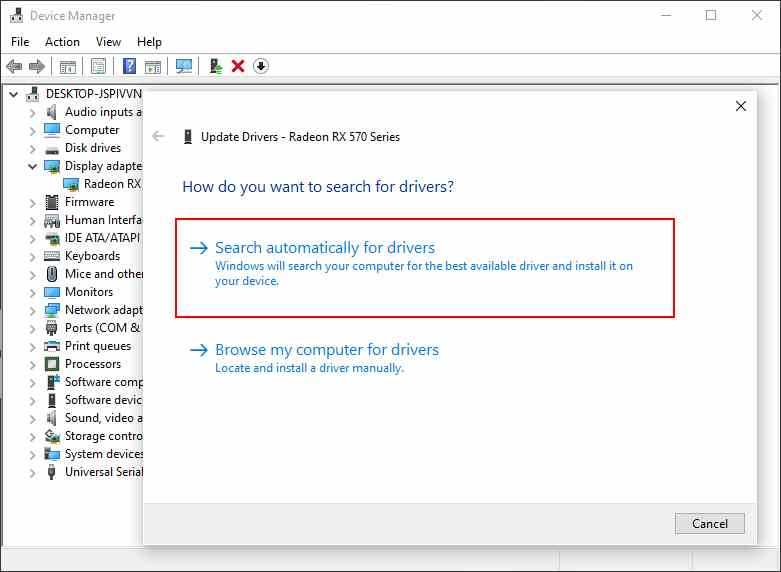
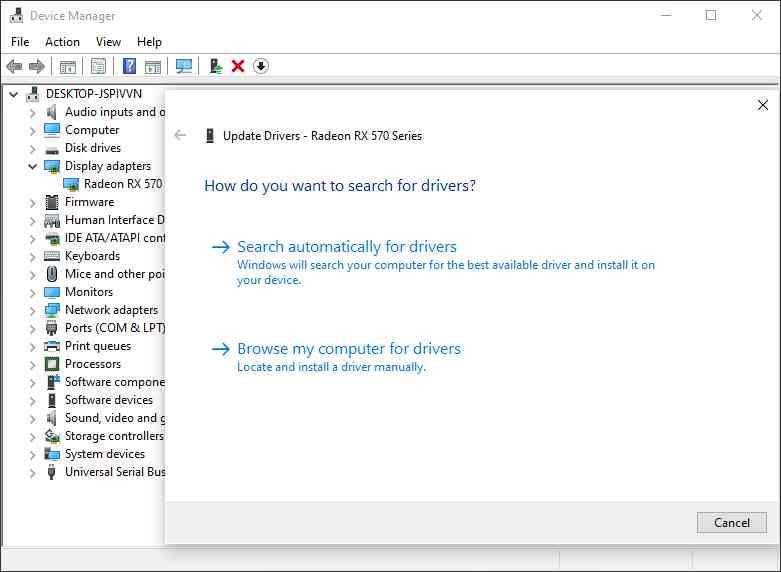
    1. Continuing with the same steps as in Method 1, right-click on the driver and select the Update Driver option.
    2. On the next screen, select Search automatically to update the driver automatically.
    3. If you are not prompted with any updates, go to the manufacturer’s site and download the driver update manually.
    4. Uninstall the current driver and reinstall the new one by clicking on the .exe file.

    Note that installing a new driver will not solve the problem if it is not compatible with your device’s system specifications. You have to identify the right driver that suits your device. To solve this problem, we recommend that you use a third-party application such as a driver booster or driver pack. This application will help find and match your device with the appropriate Graphics Card driver.

    #4. Fix Corrupt Files

    There are two common ways to repair corrupted files: using System File Checker (SFC) or Deployment Image Servicing and Management (DISM).

    Using SFC

    Using SFC
    Using SFC
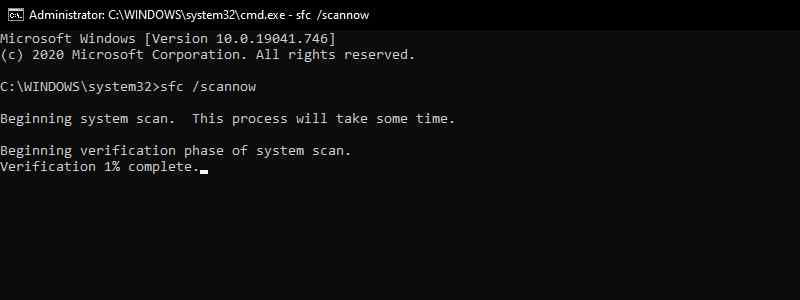
    1. Press the Windows key + R and type “ cmd ” (without quotes) in the Run dialog box.
    2. Hold Ctrl + Shift + Enter to open Command Prompt in Admin mode.
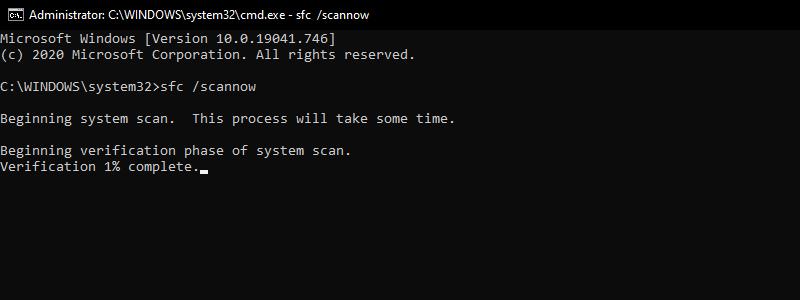
    3. Type the following code in the Command Prompt: SFC /scannow.
    4. Press Enter to run the code. The SFC tool will start scanning all system files.

    During the scan, this tool will repair all the damaged files and recover the lost ones. When the process is complete, restart the computer to apply the changes. If the problem remains unresolved after the above steps, run DISM.

    Using DISM

    Using DISM
    Using DISM
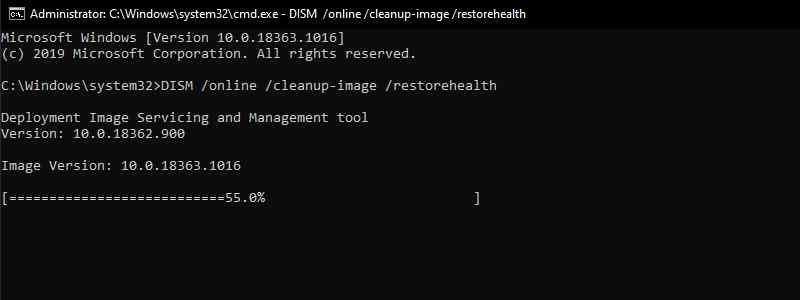
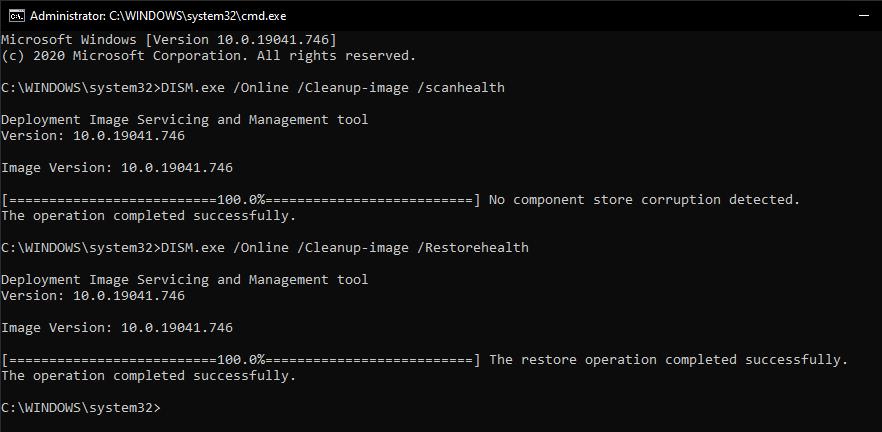
    1. Repeating Steps 1-3 as above, type the following code in the Command Prompt: dism.exe /online /cleanup-image /restorehealth.
    2. Press Enter to run the code.
    3. DISM.exe will start scanning the system memory to repair any corrupted files on your computer.
    4. When the scanning process is complete, restart the computer for the changes to take effect.

    Try running a graphics-intensive program to see if Kernel mode heap corruption occurs again. If so, don’t worry. Proceed to the next method.

    #5. RAM diagnostics

    RAM is a component that is more likely to cause problems than any other hardware component. To check for this possibility, use the Windows Memory Diagnostic tool to check the RAM. Follow the steps below:

    RAM diagnostics
    RAM diagnostics
    1. Press the Windows key + R to start the Run dialog box.
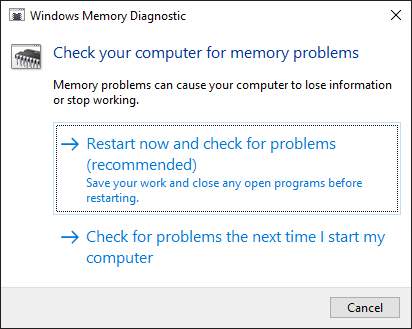
    2. Type “ mdsched.exe ” (without the quotes) in the Run dialog box and press Enter to start Windows Memory Diagnostics (WMD).
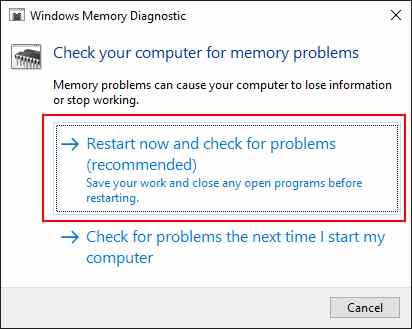
    3. In the WMD window, select Restart Now and check for problems (recommended) to check the memory.
    4. After the computer reboots, a screen with a blue background will appear with details of the checking process.
    5. If after the process is complete, an error is detected. Suppose some problem is found, and you have to replace your RAM.

    Another way to diagnose RAM is to use MemTest86. This software can help diagnose and test RAM to find errors that cause system instability.

    Read more:

    Conclusion:

    So those are some ways to deal with kernel-mode heap corruption. Make sure you follow the steps of the method correctly and in order. Admin hopes that one of the methods above can solve your problem.

  • 6 Ways to Fix Faulty Hardware Corrupted Pages on Windows 2025

    6 Ways to Fix Faulty Hardware Corrupted Pages on Windows 2025

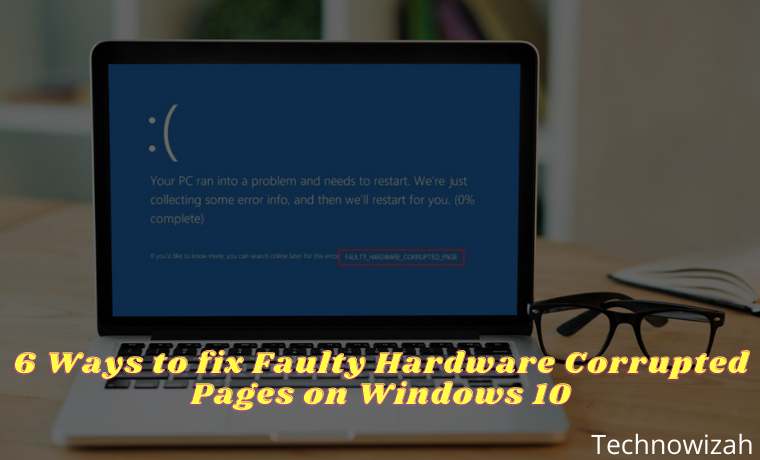
    6 Ways to Fix Faulty Hardware Corrupted Pages on Windows – Is your computer getting the error message Faulty hardware corrupted page? This is a critical error that can strike without warning. But don’t worry, there are several solutions that you can use to solve this faulty hardware corrupted page error.

    6 Ways to fix Faulty Hardware Corrupted Pages on Windows 10
    6 Ways to fix Faulty Hardware Corrupted Pages on Windows 10

    How to Fix Faulty Hardware-Corrupted Pages on Windows

    The Blue Screen of Death, technically known as a stop error, is a dreaded thing for Windows users. This can cause the computer to crash without warning, losing important files, or other data in the process. Faulty hardware corrupted page error is one of the critical errors that can strike without warning.

    Read more:

    What is a Faulty Hardware Corrupted Page Error?

    The faulty hardware corrupted page error (Windows stop code 0x0000012B) covers several different hardware issues but refers to a single-bit error. Single-bit errors occur when one bit (a minute chunk of data) is incorrectly changed during data transmission. While it may sound like a minor problem, the result can be that your system hardware malfunctions, resulting in faulty hardware and corrupted page stop code.

    There are several fixes available for the faulty hardware corrupted page stop code. But Windows stop code 0x0000012B can indicate your system hardware failed. In particular, stop codes are often associated with faulty RAM. You can check your RAM and other hardware issues with this fix for faulty hardware and corrupted page stop code.

    Here are some reasons that can cause faulty hardware corrupted page errors:

    • Incomplete installation or uninstall of certain programs/applications.
    • Viruses and malicious software infect computers, causing damage to the system or related program files.
    • Blue screen of death during Windows 10 update.
    • Incorrectly configured old or corrupt device drivers, such as HP, Dell, Lenovo, etc. Or, driver conflicts after installing new hardware.
    • Windows registry corruption due to recent software changes.
    • Deleted system files, or corrupted system files.
    • Hard disk bad sectors, hard disk is damaged or corrupt.
    • There are PC components that are not installed properly, such as RAM or GPU.

    How to Fix Faulty Hardware Corrupted Page Error

    #1. Restart Computer

    If you haven’t already, restart your computer. Although it sucks to hear, it can fix a lot of problems. Before delving into further fixes, restart your computer and see if that solves the problem.

    #2. Reinstall Hardware

    Since the faulty hardware corrupted page error is related to your system hardware, the general fix is ​​to repair your system hardware. If your system is accidentally bumped, your RAM or graphics card may be jolted out of position.

    For that, you have to go into your PC or laptop case to reinstall the hardware and make sure all the components in your PC case are installed correctly. Be aware that this will void your manufacturer’s warranty in certain cases, so proceed with caution.

    #3. Run SFC

    A faulty hardware corrupted page stop code can indicate a problem with your system files. Windows System File Check (SFC) is an integrated Windows system tool that you use to check for errors in your Windows installation files.

    Before running the SFC command, you need to check if it is fully working. You don’t want SFC to miss an error because it’s not working properly. To do this, you can use  DISM, the Deployment Image Servicing, and the Management tool.

    Like SFC, DISM is an integrated Windows utility with multiple functions. In this case, the DISM Restorehealth command ensures that your next repair will work properly. Perform the following steps to do so.

    Run SFC
    Run SFC
    1. Type   Command Prompt (Admin)  in the start menu search bar, then right-click and select  Run as administrator to open a Command Prompt with admin privileges.
    2. Type the following command and press Enter:   DISM /online /cleanup-image /restorehealth
    3. Wait for the command to finish. The process can take up to 20 minutes, depending on your system error. The process seems to crash at times, but wait for it to finish.
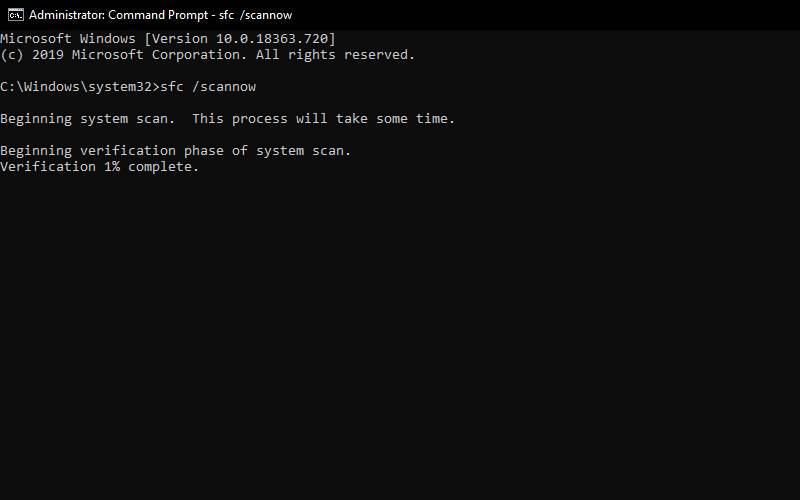
    4. When the process is complete, type SFC /scannow and press Enter.

    #4. Run CHKDSK

    Like SFC, CHKDSK is a Windows tool that you can use to verify your Windows 10 file system. The difference is that CHKDSK scans your entire drive for errors, while SFC scans Windows system files specifically.

    Follow the steps below to use the CHKDSK scan which can find the problem and fix your machine.

    Run CHKDSK
    Run CHKDSK
    1. Type the command prompt in your Start menu search bar, then right-click the most suitable one and select  Run as administrator. (Alternatively, press the Windows key + X, then select   Command Prompt (Admin)   from the menu.)
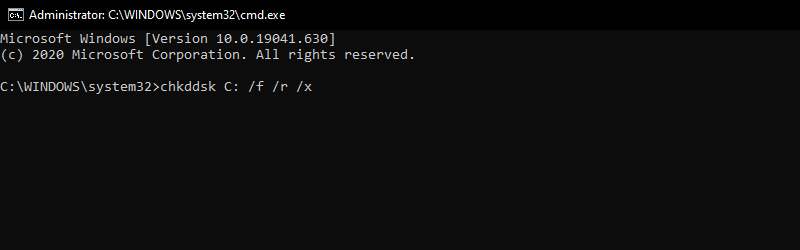
    2. Next, type chkdsk /r   and press Enter. The command will scan your system for errors and fix any issues along the way.

    #5. Check the Driver

    Sometimes, new Windows drivers will interfere with your hardware and cause errors. Windows 10 now handles most driver updates, so a faulty driver can cause quite a bit of trouble.

    You can see a list of the latest Windows driver updates on the Update & Security settings page.

    Check Driver
    Check Driver

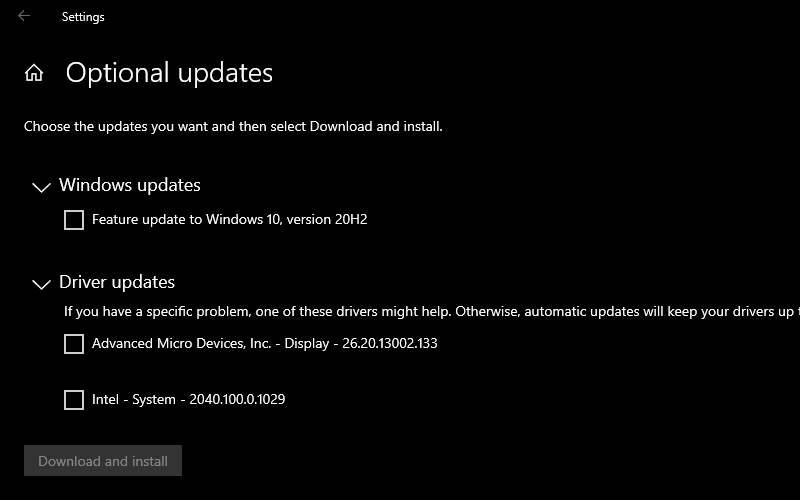
    Press Windows key + I  to open the Settings panel, then select  Update & Security > View optional update. You can find any driver updates here.

    Now, type the device manager in the Start menu search bar and select the most suitable one. Go down the list and check for the error symbol. If it’s not there, chances are that your driver status is not the source of the problem.

    Several apps let you update all your system drivers at the same time without having to search for them manually. Examples such as driver booster.

    #6. Check RAM Using MemTest86

    Check RAM Using MemTest86
    Check RAM Using MemTest86

    Windows Memory Diagnostic Tool is a Windows system tool that you can use to analyze errors in your RAM. However, it is not the best choice for the job. You can use MemTest86, a free memory testing tool for x86 machines.

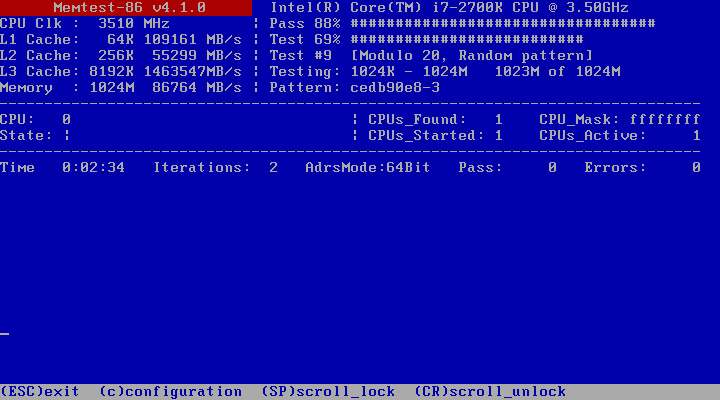
    You can boot MemTest86 from a USB flash drive (or bootable disk) and leave it to check your system RAM. MemTest86 took a while to complete its work. To fully evaluate the RAM, you have to run at least two passes. Since a single pass can take hours, the analysis process can take a while. However, MemTest86 will uncover serious RAM issues during the process, so it’s worth the wait.

    Go to the MemTest86 download page and download the Image to create a bootable CD (ISO format). Next, you need to write the MemTest86 ISO to a USB flash drive.

    Download the tool, burn MemTest86 to your USB flash drive, and then shut down your system. Now, reboot your system while pressing the key for your Boot Selection menu (usually F10, F11, DEL, or ESC), then select the bootable MemTest86 USB flash drive. The memory test will start automatically.

    Read more:

    Conclusion:

    So those are some ways to solve Faulty hardware corrupted pages. Blue Screen of Death (BSOD) is indeed very troubling for many Windows users, but it can all be solved with a few solutions and the right working steps. So make sure you run all the solutions above in sequential order.

  • 7 Ways to fix Unspecified Error 0x80004005 In Windows 10 [2025]

    7 Ways to fix Unspecified Error 0x80004005 In Windows 10 [2025]

    7 Ways to fix Unspecified Error 0x80004005 In Windows 10 – Unspecified error 0x80004005 can strike at any time. But don’t worry, because this is easy to fix. Unlike most other errors in Windows, error 0x80004005 is an “unspecified error. That is, it can be caused by several reasons.

    7 Ways to fix Unspecified Error 0x80004005 In Windows 10
    7 Ways to fix Unspecified Error 0x80004005 In Windows 10

    How to fix Unspecified Error 0x80004005 In Windows 10

    The most common reasons for unspecified error 0x80004005 include Windows Update issues, corrupted files and folders, and errors extracting compressed files. Because of this, dealing with this error can be a little more complicated than usual, but one of these methods will help. So, here’s how to solve unspecified error 0x80004005 in Windows.

    Read more:

    #1. Run Windows Update, Troubleshooter

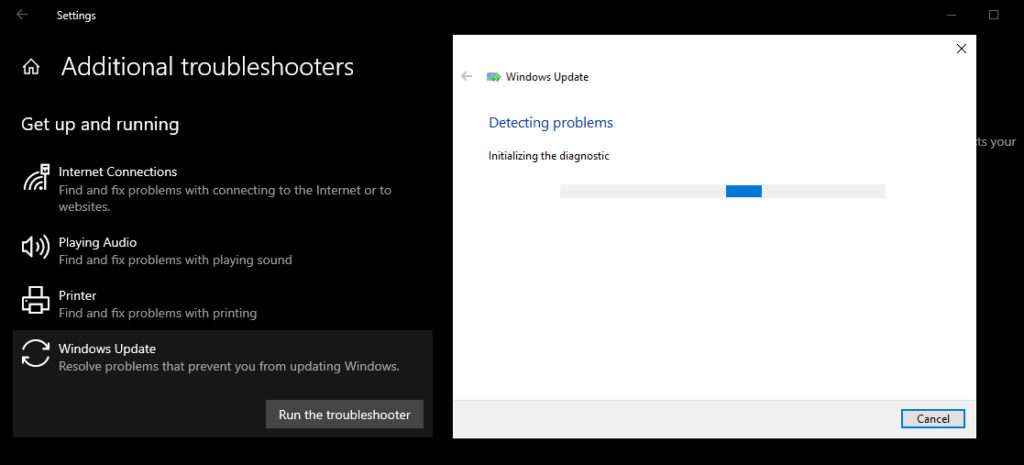
    If error code 0x80004005 appears when you try to update your Windows PC, we recommend running the Windows Update Troubleshooter. This utility is competent enough to identify and fix common errors that may occur when updating. Follow these steps to launch the Windows Update Troubleshooter:

    Run Windows Update Troubleshooter
    Run Windows Update Troubleshooter
    1. Press Windows key + I  to open Settings, then head to Update & Security.
    2. In the navigation bar on the left, click  Troubleshoot.
    3. In the Troubleshoot window, click  Additional troubleshooters.
    4. Under Get up and running click Windows Update.
    5. Click  Run the troubleshooter.

    Apart from that, users can also try other fixes for Windows Update. Like deleting files in the Windows Update folder. To do this, navigate to C:\Windows\SoftwareDistribution\Download  and delete all the contents of the folder.

    After deleting the Windows Update files and running the troubleshooter, it’s time to run Windows Update again.

    1. Press Windows key + I  to open Settings, then head to  Update & Security.
    2. Under  Windows Update, click  Check for updates.
    3. If prompted, allow Windows to download and install the update.

    #2. Clean Boot Windows

    Sometimes, third apps can interfere with Windows functionality. Since 0x80004005 is a widespread error, it’s a good idea to perform a clean boot to eliminate third-party applications as the cause of the problem. To do so follow the steps below:

    Clean Boot Windows
    Clean Boot Windows
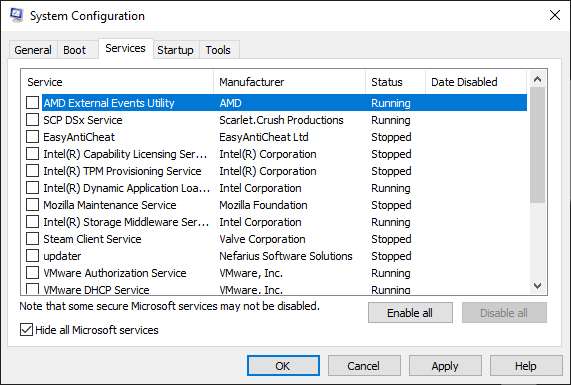
    1. In the Start menu search bar, type sys config. From the search results, click on  System Configuration.
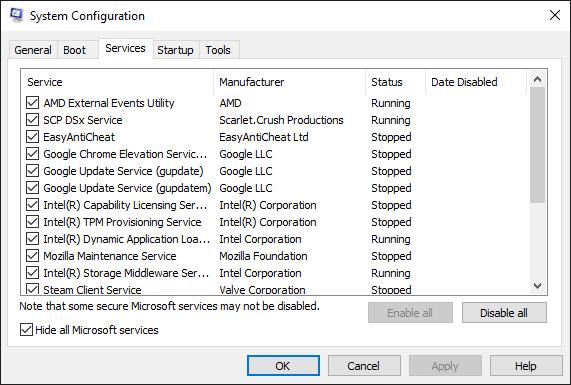
    2. In the System Configuration window, navigate to the Services tab.
    3. Check the Hide all Microsoft services box.
    4. Now select all services in the list and click  Disable all.
    5. Click OK and close System Configuration.
    6. After this, press  CTRL + Shift + Esc to launch the  Task Manager.
    7. Click on the Startup tab.
    8. Select each entry in the list of services and click  Disable. Unlike System Configuration, you have to disable services one by one.
    9. Click OK and close Task Manager.
    10. Restart your computer.

    After booting, check to see if the error still occurs. If something triggers the error, try doing it again. If the error does not appear, uninstall the application or driver that was recently installed.

    #3. Change Registry Entries

    This fix is ​​specifically for users who get error 0x80004005 when accessing shared files or folders. A slight change to Windows 10 registry entries can eliminate error code 0x8004005.

    Change Registry Entries
    Change Registry Entries
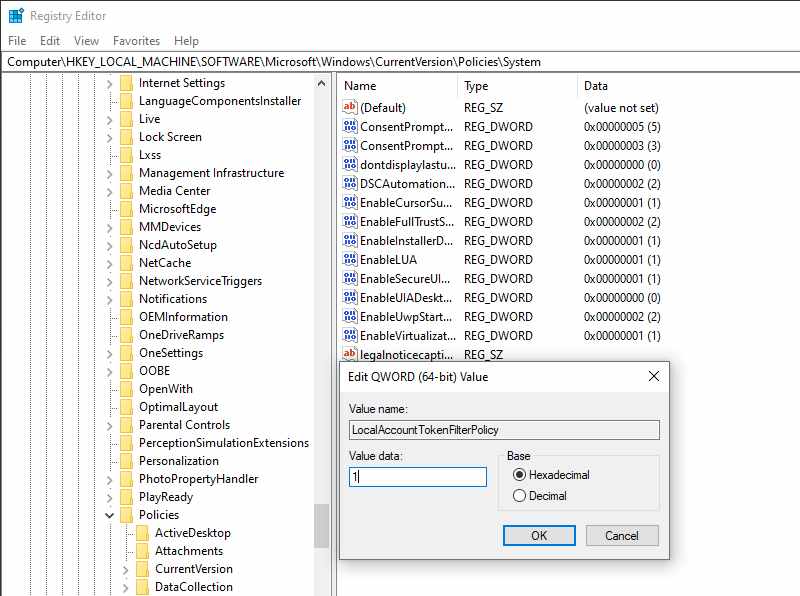
    1. Press the Windows key + R  to launch the Run box. Type Regedit in the text box and press Enter.
    2. Navigate to the following location in the Registry Editor: HKEY_LOCAL_MACHINE\SOFTWARE\Microsoft\Windows\CurrentVersion\Policies\System
    3. Right-click any part of the white area in the window. Go to  New>QWORD (64-bit) Value. If you are using a 32-bit system, click DWORD (32-bit) Value.
    4. Rename the newly created entry to  LocalAccountTokenFilterPolicy.
    5. Double-click on the entry and change the value data from 0 to 1.
    6. Close Registry Editor and reboot your computer.

    #4. Uninstall Microsoft 6to4 Devices

    Unexpectedly, Microsoft 6to4 network adapters are also known to cause this problem. In such a case, the user should remove all Microsoft 6to4 devices from the computer. You can do this using the Device Manager.

    Uninstall Microsoft 6to4 Devices
    Uninstall Microsoft 6to4 Devices
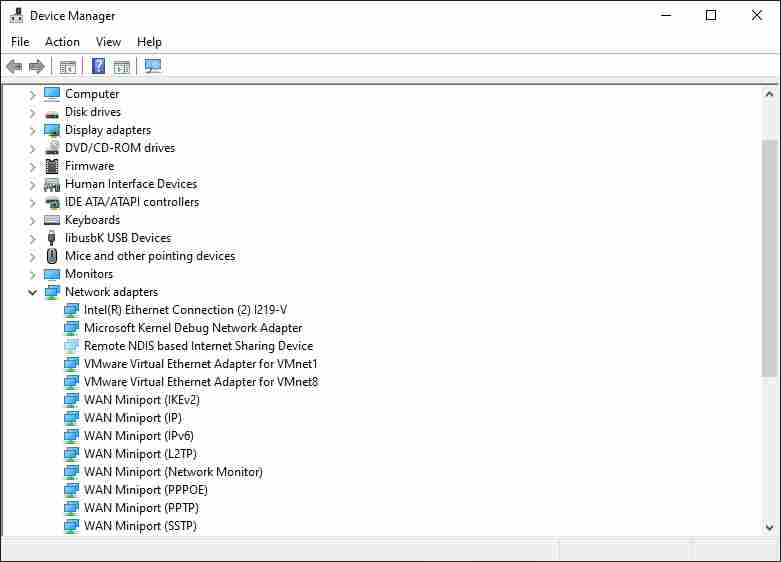
    1. Press Windows key + R   to open the Run box. Type devmgmt.msc in the text box and press Enter.
    2. Since these devices are usually hidden, you will need to open  View under the Device Manager title bar. Click  Show hidden devices.
    3. Navigate to  Network adapters and expand the menu.
    4. Right-click on any  Microsoft 6to4 Adapter and click  Uninstall device.
    5. When prompted, make sure to select Delete driver software for this device.
    6. Close Device Manager and reboot the computer.

    #5. Use Third-party Archiving Software

    If you see this error code while trying to extract compressed files using Windows Explorer, it might be time to switch to a third-party archiving utility. There are tons of options available out there, the popular ones being WinRAR7Zip, and WinZip. Third-party archiving software also helps extract password-protected archives.

    #6. Re-register Jscript.dll and Vbscript.dll

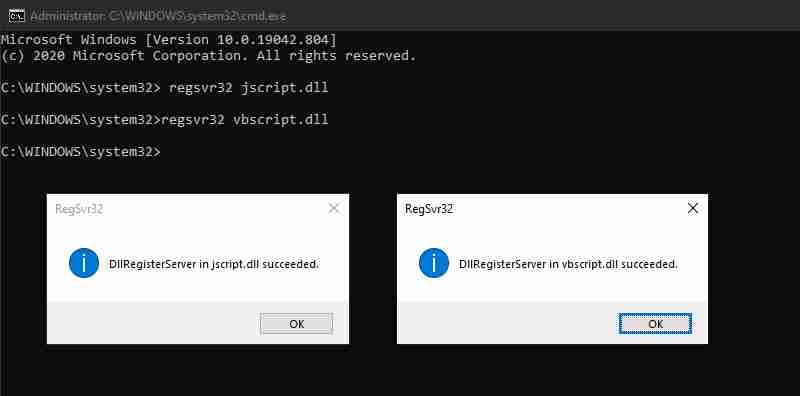
    Another simple fix for error code 0x80004005 is to re-register the jcript.dll and vbscript.dll files. This can be done using the Command Prompt:

    Re-register Jscript.dll and Vbscript.dll
    Re-register Jscript.dll and Vbscript.dll
    1. In the  Start menu search bar, enter cmd. From the search results, right-click on  Command Prompt>Run as administrator.
    2. In the console, type regsvr32 jscript.dll press Enter.
    3. After this, type  regsvr32 vbscript.dll  and press Enter.
    4. Close Command Prompt and reboot the computer.

    #7. Run SFC To Check For Corrupt System Files

    Windows has many tools to diagnose and fix common errors. SFC (System File Checker) is one of them. It checks for missing or corrupt system files and fixes them. It is easy to use and can be run with a simple Command Prompt command.

    Run SFC To Check For Corrupt System Files
    Run SFC To Check For Corrupt System Files
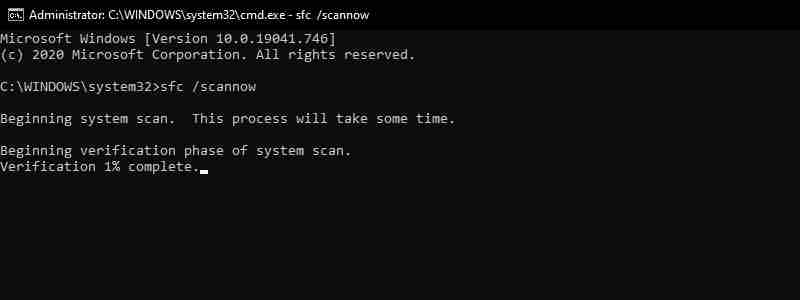
    1. Press Windows key + R  to launch the Run box. In the text box, type cmd and press  CTRL + Shift + Enter to launch Command Prompt as administrator.
    2. In the Command Prompt console, type   SFC /scannow and press Enter.
    3. SFC will automatically scan and repair your system files.
    4. Reboot the computer.

    Read more:

    Conclusion:

    So that’s how to solve the unspecified error code 0x80004005. One of the above methods will get rid of the error 0x80004005 problem. However, users should try different fixes as the type of error that occurs can be caused by different things. Ideally, you should also try all the common troubleshooting methods other than the ones listed above.

  • 6 Ways to Fix PAGE_FAULT_IN_NONPAGED_AREA in Windows 10 [2025]

    6 Ways to Fix PAGE_FAULT_IN_NONPAGED_AREA in Windows 10 [2025]

    6 Ways to Fix PAGE_FAULT_IN_NONPAGED_AREA in Windows 10 – Most critical errors in Windows 10 are the result of software faults or malfunctioning drivers. However, Page Fault in Nonpaged areas is usually caused by a hardware problem, especially RAM. The error can also be associated with Windows virtual memory management errors.

    6 Ways to Fix PAGE_FAULT_IN_NONPAGED_AREA in Windows 10
    6 Ways to Fix PAGE_FAULT_IN_NONPAGED_AREA in Windows 10

    How to Fix PAGE_FAULT_IN_NONPAGED_AREA in Windows 10

    To eliminate them, users must diagnose hardware and software faults. Here are six ways to solve the PAGE_FAULT_IN_NONPAGED_AREA blue screen of death.

    Read more:

    #1. Check the RAM

    If you’ve made any recent hardware changes to your computer, it’s a good idea to check if everything is installed properly.

    Sometimes, the new RAM can be damaged, or even the old one can be damaged. Here are some things you can do to check RAM. Remember to turn off the computer and disconnect all cables before continuing.

    Check RAM
    Check RAM
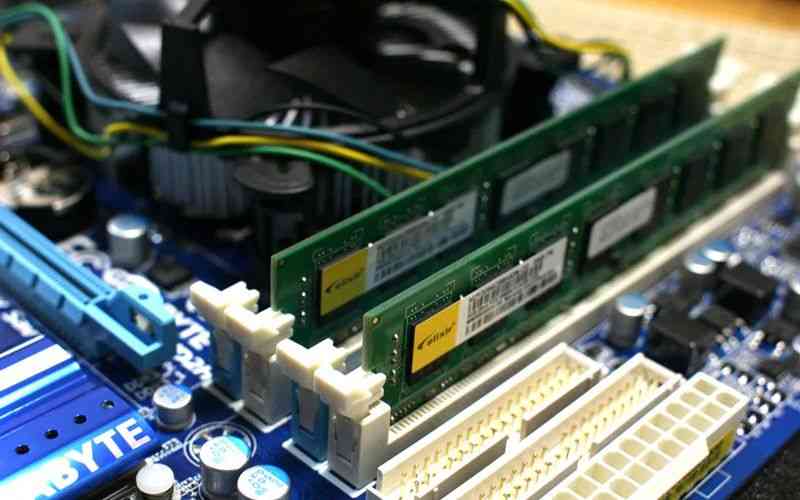
    1. If you are using two RAM sticks, try changing the slots.
    2. If you are using a single RAM chip, clean any dust that may have accumulated.
    3. If you have some spare RAM modules, try changing the RAM and rebooting the PC. If the error does not appear, it means that the RAM you used previously was damaged.
    4. Try using only one RAM slot.

    #2. Update Or Roll Back the Driver

    Wrong drivers can damage your computer. That’s why you should always update your drivers to the latest versions. But sometimes these updates may be unstable, which can damage your computer. In such cases, it is best to roll back to the previous version.

    How to Update Drivers Using Device Manager

    Device Manager is by far the most effective way to keep your system drivers updated.

    In case of Page Fault in Nonpaged Area BSOD, usually, the graphics driver or chipset is at fault. Graphics drivers are found under  Display adapters in Device Manager, and chipset drivers are under System Devices. Here’s how to update drivers using the device manager:

    How to Update Drivers Using Device Manager
    How to Update Drivers Using Device Manager
    1. Press the Windows key + R  to open the Run dialog box. Type devmgmt.msc and press Enter.
    2. In the Device Manager window, locate the driver you want to update and expand the menu.
    3. Then right-click on the required driver and click Update driver.
    4. In the next window, click  Search automatically for updated driver software.
    5. Windows will automatically download and install the latest drivers.

    How to Roll Back Driver Using Device Manager

    As previously mentioned, there are instances when the new driver may be unstable. Here are the steps to roll back drivers using Device Manager:

    How to Roll Back Driver Using Device Manager
    How to Roll Back Driver Using Device Manager
    1. Press the Windows key + R  to run the Run command. Type devmgmt.msc and press Enter.
    2. In  Device Manager, expand the section containing drivers. Right-click on the desired driver and select  Properties.
    3. Under the Driver tab, click  Roll Back Driver.

    #3. Disable Automatically Manage Paging File Size

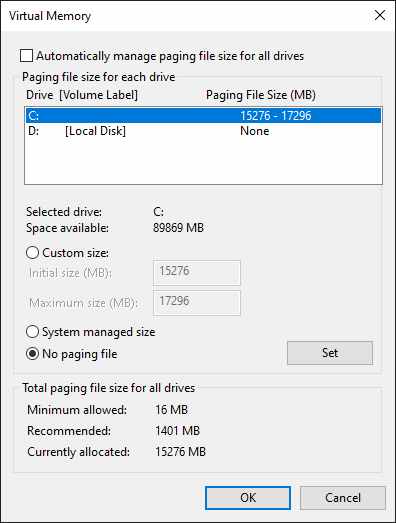
    This method has a high success rate of fixing PAGE_FAULT_IN_NONPAGED_AREA because it is directly related to virtual memory. Windows normally manages the size of the paging file, but if it’s causing your system to crash, it’s best to disable it:

    Disable Automatically Manage Paging File Size
    Disable Automatically Manage Paging File Size
    1. Open  File Explorer and right-click on This PC. Select  Properties.
    2. In the left pane, click on  Advanced system settings. You need administrator rights to do this.
    3. In   System Properties, click on the Advanced tab. Under the Performance section, click  Settings.
    4. In the Performance Options window, navigate to the Advanced tab.
    5. In the Virtual Memory section, click  Change.
    6. Uncheck the Automatically manage paging file size for all drives option and click OK.
    7. Apply all settings and reboot your computer.

    If the PC is working fine after a reboot, leave the settings as they are, but if the error persists, it is recommended to revert the changes and check the Automatically manage paging file size for all drives option.

    #4. Run Windows Memory Diagnostic Tool

    Windows Memory Diagnostic is a built-in Windows utility that checks and fixes problems with RAM. Easy to use and very effective. This is how you use it.

    Run Windows Memory Diagnostic Tool
    Run Windows Memory Diagnostic Tool
    1. In the Start menu search bar, type “Windows Memory Diagnostic” and select the most appropriate one.
    2. You can choose to  Restart now and check for problems or do it the next time you turn on the computer. You are advised to choose the first option.

    #5. Use DISM And SFC To Repair Corrupt System Files

    DISM and SFC are two of the most effective utilities for repairing system files. Since there is a possibility that an error system file is the cause of the problem, it is recommended that you use these two utilities.

    How to Run DISM

    Use DISM And SFC To Repair Corrupt System Files
    Use DISM And SFC To Repair Corrupt System Files
    1. In the Start menu search bar, type cmd and right-click on  Command Prompt > Run as administrator.
    2. Type DISM /Online /Cleanup-Image /CheckHealth in the console and press Enter.
    3. Then type  DISM /Online /Cleanup-Image /restore health and press Enter.
    4. Wait for the process to complete and exit Command Prompt.

    How to Run SFC

    How to Run SFC
    How to Run SFC
    1. Follow step 1 in the previous section to run  Command Prompt as administrator.
    2. In the console, type   SFC /scannow and press Enter.
    3. Wait for Windows to scan and fix errors.
    4. Restart your computer.

    #6. Disable Third-Party Software

    Often, third-party software interferes with system functionality and can cause blue screen errors such as PAGE_FAULT_IN_NONPAGED_AREA. In this case, the user must perform a clean boot to rule out third-party applications as the cause of this error. To do this, follow the steps below:

    Disable Third-Party Software
    Disable Third-Party Software
    1. Press the Windows key + R to open the Run command. Type msconfig and press Enter.
    2. In the System Configuration window, go to the Services tab.
    3. Check the option Hide all Microsoft services located at the bottom.
    4. Check all services from the list in the middle, and click  Disable All.
    5. Save and exit.
    6. Now, open  Task Manager. You can do this by pressing  CTRL + Shift + ESC.
    7. Under the Startup tab, click each program and then click  Disable.
    8. Exit and reboot your computer.

    If the error is resolved, it means a third-party app is causing the problem. To prevent this from happening again, you will have to uninstall any recently installed apps.

    Read more:

    Conclusion:

    So those are some ways to solve PAGE_FAULT_IN_NONPAGED_AREA. The fix mentioned above is ​​an easy way to solve PAGE_FAULT_IN_NONPAGED_AREA BSOD. If you have faulty hardware, double-check if it is compatible with your PC.